Bond and Bail in Mobile County: How It Works and What Affects the Amount
Getting arrested is scary. One of the first questions most people ask is simple: “How do I get out of jail?” The answer usually comes down to bail and bond.
Understanding bail bond Mobile County rules can help you move faster once an arrest happens. It can also help you avoid costly mistakes. Below, we break down how the process works and what affects your final bond amount.
What Is Bail?
Bail is money paid to the court. It works like a deposit. You pay it to guarantee that you will show up for future court dates.
If you attend every hearing, the court returns the bail money at the end of the case. If you skip a court date, you lose that money. The court may also issue a warrant for your arrest.
What Is a Bond?
A bond is different from bail, but the two work together. Most people cannot pay the full bail amount in cash. So they turn to a bail bond company instead.
Here’s how it works. You pay the bondsman a percentage of the total bail, usually around 10%. The bondsman then pays the rest to the court on your behalf. In exchange, you agree to appear at every court date.
This fee is non-refundable. Even if your case gets dismissed, you do not get the bondsman’s fee back.
How Bail Amounts Get Set in Mobile County
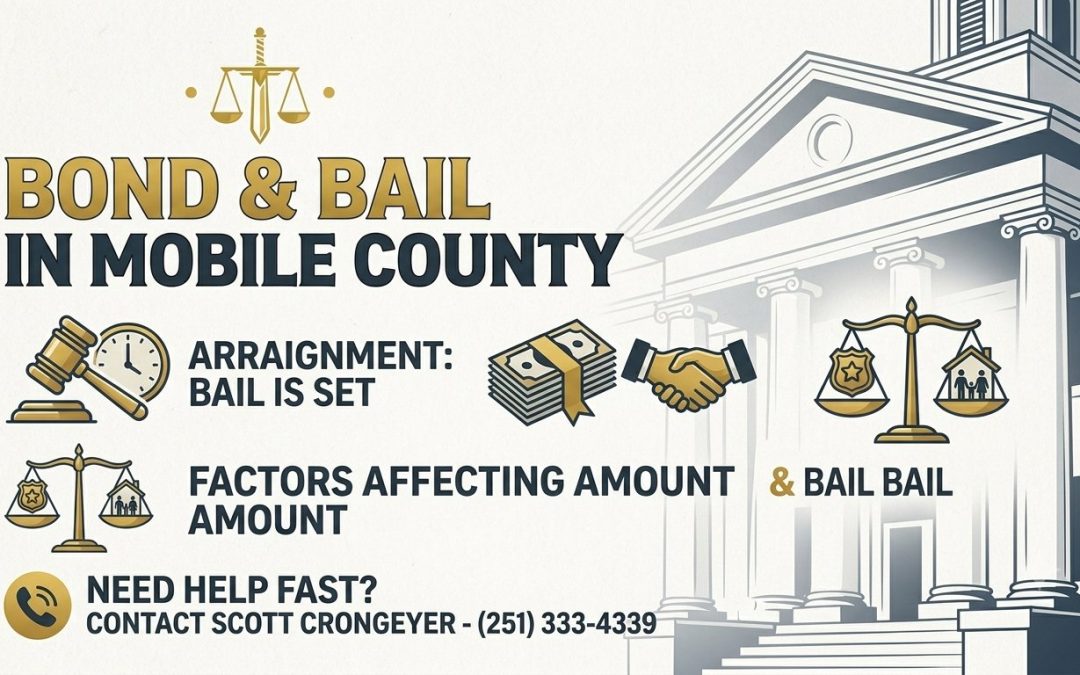
A judge or magistrate sets your bail amount shortly after arrest. This usually happens during your first court appearance, called an arraignment.
Mobile County uses a bail schedule for many common charges. This schedule lists standard bail amounts by offense type. However, judges can adjust the amount up or down based on your specific situation.
Factors That Affect Your Bond Amount
Several factors influence how much a judge sets for bail. These include:
- The severity of the charge. Felony charges typically carry higher bail than misdemeanors.
- Your criminal history. Prior convictions or open cases can raise your bail amount.
- Flight risk. Judges consider whether you have strong ties to the community, such as a job, family, or property.
- Public safety concerns. If the charge involves violence or a weapon, bail often increases.
- Prior failures to appear. Missing court dates in the past can hurt your case.
Each of these factors plays a role. A judge weighs them together before deciding your final bond amount.
Can Bail Be Denied?
Yes. In some cases, a judge can deny bail altogether. This usually happens with serious violent felonies, such as murder or certain repeat offenses.
If a judge believes you pose a significant danger to the community, they may hold you without bond. This is one reason having an attorney present early in the process matters so much.
Can You Fight a High Bail Amount?
Yes, you can. If your bail feels unreasonably high, your attorney can request a bond reduction hearing. During this hearing, your lawyer presents evidence that supports a lower amount.
This might include proof of steady employment, strong family ties, or a clean record. A skilled attorney knows how to present this information effectively.
What Happens If You Cannot Afford Bail?
Many people struggle to afford bail, even with a bond company’s help. If this happens to you, don’t panic. Your attorney can request a bond reduction or explore other release options.
In some cases, judges allow release on your own recognizance. This means you’re released without paying bail, based on a written promise to appear in court.
Why You Need an Attorney Right Away
The hours after an arrest matter. An experienced criminal defense attorney can advocate for a lower bond amount right from your first court appearance.
Attorney Scott Crongeyer has helped countless clients throughout Mobile County navigate the bail process. He understands how local judges evaluate bond decisions, and he knows how to build a strong case for a fair amount.
Contact Scott Crongeyer Today
If you or a loved one has been arrested in Mobile County, don’t wait to get help. Call Scott Crongeyer at (251) 333-4339 for immediate assistance with your bail and bond questions.